Weight loss without the gym by changing your kitchen, your drinks and your table

Weight loss is possible without a gym membership because food has the bigger effect on the scales, and the simplest lever is to change the setting around your food so the easy choice becomes the lighter 1. Willpower runs out. A well arranged kitchen keeps working.
A coach from the club reviews your circumstances alongside you and suggests the right next steps.
Book your free assessmentIn this article
What you see is what you eat
Food on the worktop gets eaten. Put a fruit bowl where the biscuit tin used to be. Move treats to a high cupboard or stop buying them for the week. Keep chopped vegetables and yoghurt at eye level in the fridge. These changes take 10 minutes and work every day after that.
Smaller plates, fuller look
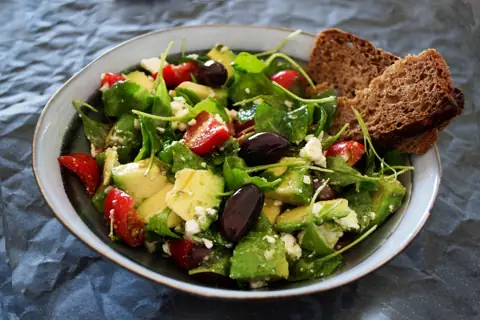
A medium plate filled well feels more generous than a large plate half empty. Serve from the hob instead of putting dishes on the table, so second helpings need a decision. Our guide to light evening meals shows how to fill that plate.
The drinks you forget
Drinks rarely feel like food. Yet the NHS page on calories in alcohol shows how fast wine and beer add up over a year. Sugary soft drinks, juices and coffee shop specials do the same. The NHS advice on sugar in our diet suggests swapping them for water, lower fat milk or drinks without added sugar. Alcohol free days in the week help both sleep and appetite.
Shopping with a plan
Write a list based on 4 or 5 dinners and stick to it. Shop after a meal, not before. Buy fruit and vegetables first, so the basket fills with them. A weekly delivery order can also stop impulse buys.
A proper seat at the table
Eating standing up, in the car or in front of a screen makes it easy to eat more without noticing. Sit down, use a plate and give the meal your attention. Meals eaten this way feel more satisfying, as our article on feeling fuller for longer explains.
Movement still counts, without a membership
You do not need a gym, but your body still likes to move. Walking, gardening, cleaning and taking the stairs all count. A weekend wander around the Bure Park nature reserve or a walk to the station instead of a lift adds steps without any kit. Moving more also helps keep muscle while you eat a little less.
1 change a week
Pick 1 of these ideas this week. Perhaps the fruit bowl. Next week, the drinks. Changing everything at once rarely lasts, while small changes built on each other often do. Our article on first steps to eating well offers a starting order.
Members of the club come together every morning for breakfast before work, a shared routine that makes the rest of the day easier to organise around good food.
If you have a health condition or take medication, check with your GP before changing your diet. This article does not replace advice from your GP or another health professional.
Your weight loss curve
Add your profile and the curve is redrawn at once.
Losing 8 kg at the median pace would take roughly 11 weeks, or around 4 months at the gentlest one.
Most guidance puts lasting weight loss at 500 g to 1 kg per week, which is the ideal zone on the chart. Lose more than 1 kg per week consistently and the body eats into muscle and not just fat, shown by the hatched zone.
This projection is a rough guide only. Each person’s journey is their own, and results are not the same for everyone. The sums are done on your device, with nothing stored or sent anywhere. Over 65, speak to your doctor before anything else.
How this curve is calculated
At the top, the zone’s edge marks 500 g per week, the gentlest rate. At the bottom, its edge marks 1 kg per week, the point where risk starts.
Weight comes off faster in the first weeks, much of it water, before the pace eases. Beyond 40, the median curve gradually flattens as metabolism slows down. With the same effort, men generally lose a little faster than women.
Like real life, the journey curve includes plateaus a few days long and minor regains. It is no prediction of the path you will follow.
The tips here are general and are no substitute for medical advice.
Further reading

Daily support is set out in the club programme for better balanced eating.