Breakfast that lasts until lunch, how to build it when you are losing weight

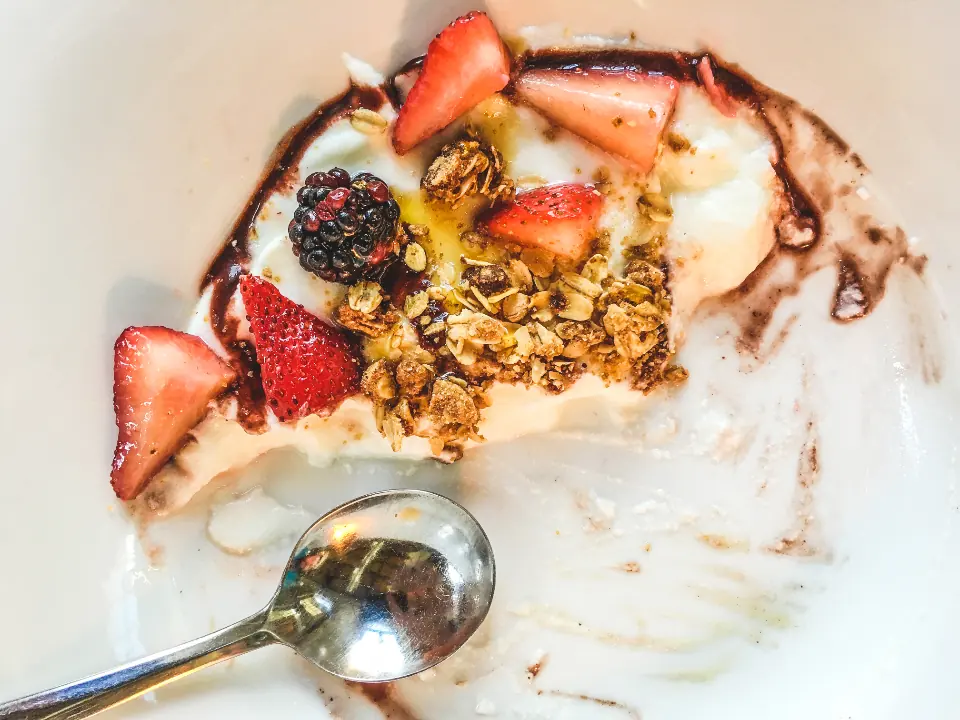
The best breakfast for weight loss pairs a source of protein with slow fibre and some fruit, because that mix keeps hunger quiet until lunch. A bowl of sugary cereal or a pastry eaten on the go looks harmless at 7am. By 10:30am it often turns into a hunt for something sweet.
A coach from the club reviews your circumstances alongside you and suggests the right next steps.
Book your free assessmentIn this article
How to judge your current breakfast
Ask yourself 3 questions tomorrow morning. Is there protein in the bowl or on the plate? Is there fibre, from oats, wholegrain bread, fruit or seeds? And how hungry are you 3 hours later? If the honest answer to the last one is very, the first 2 usually explain why.
5 ways to build it
- Porridge, upgraded. Oats made with milk, a spoonful of plain yoghurt stirred in and some sliced apple. The British Heart Foundation has more ideas for a healthy breakfast, porridge included.
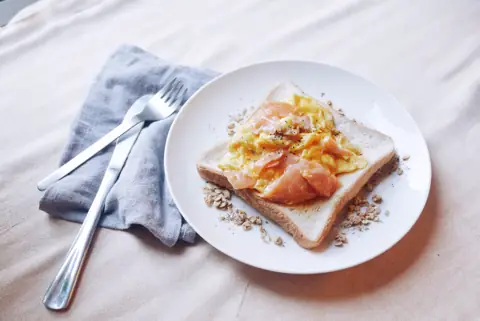
- Eggs and greens. 2 scrambled eggs on wholegrain toast with spinach or tomatoes.
- The jar for the train. Overnight oats with yoghurt and frozen berries, ready to carry to Bicester North or Bicester Village station.
- Savoury and quick. Cottage cheese on rye bread with sliced cucumber.
- The weekend plate. Baked beans on wholemeal toast with a poached egg and grilled mushrooms.
Fibre, the part people skip
Most adults in the UK eat well under the 30g of fibre a day recommended in the SACN report on carbohydrates and health. Breakfast is the easiest place to close part of that gap. Oats, wholegrain bread, fruit with the skin on and a spoonful of seeds all count. Our guide to high fibre foods lists more.
What to watch
Granola and cereal bars can carry as much sugar as a biscuit, so check the label. Fruit juice is best kept to a small glass. Pastries and white toast with jam fill the gap for an hour, not a morning. For the right amount of protein across the day, see our article on protein needs.
If you are not hungry early
Some people cannot face food at 6am. That is fine. Take something with you and eat it when you arrive, rather than skipping until lunch and arriving starving. A banana and a small pot of yoghurt in your bag, or a slice of wholegrain toast with peanut butter wrapped in foil, are easy to eat at your desk. Coffee alone is not breakfast, even if it quiets hunger for an hour.
This article does not replace advice from your GP or another health professional, particularly if you have a medical condition or take regular medication.
Breakfast is what the club is built on
At Bicester Nutrition, members eat their breakfast at the club in the morning, before heading off to work. Your first visit can start with a free assessment.
Your weight loss curve
Add your profile and the curve is redrawn at once.
Losing 8 kg at the median pace would take roughly 11 weeks, or around 4 months at the gentlest one.
Most guidance puts lasting weight loss at 500 g to 1 kg per week, which is the ideal zone on the chart. Lose more than 1 kg per week consistently and the body eats into muscle and not just fat, shown by the hatched zone.
This projection is a rough guide only. Each person’s journey is their own, and results are not the same for everyone. The sums are done on your device, with nothing stored or sent anywhere. Over 65, speak to your doctor before anything else.
How this curve is calculated
At the top, the zone’s edge marks 500 g per week, the gentlest rate. At the bottom, its edge marks 1 kg per week, the point where risk starts.
Weight comes off faster in the first weeks, much of it water, before the pace eases. Beyond 40, the median curve gradually flattens as metabolism slows down. With the same effort, men generally lose a little faster than women.
Like real life, the journey curve includes plateaus a few days long and minor regains. It is no prediction of the path you will follow.
The tips here are general and are no substitute for medical advice.
Further reading

Daily support is set out in the club programme for better balanced eating.