Eating well, how to start from your own kitchen and shopping list


The easiest way to start eating well is to change what comes into your kitchen, because the food in your cupboards decides most of your meals before you are hungry. Willpower runs low at 7pm after a long day. A sensible fridge does not.
A coach from the club reviews your circumstances alongside you and suggests the right next steps.
Book your free assessmentIn this article
Start with the shopping, not the plate
Look at your last 2 shopping receipts. Circle what you bought on autopilot and what never got eaten. This is your real starting point, much more than a meal plan copied from somewhere else. Then write a short list for next time, with 3 columns. Vegetables and fruit, protein, and carbs that keep you full.
Staples worth keeping in
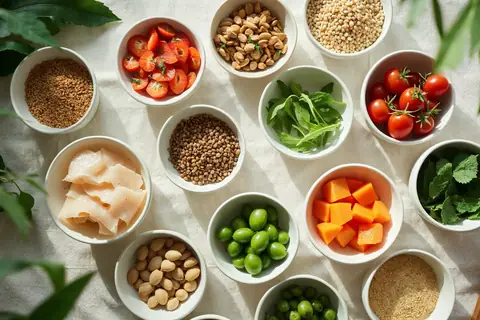
- Freezer. Frozen peas, spinach, mixed vegetables and berries. No waste, no excuses.
- Cupboard. Tinned tomatoes, chickpeas, lentils, tuna, porridge oats and wholewheat pasta.
- Fridge. Eggs, plain yoghurt, a block of cheese for flavour and a bag of salad.
Batch cooking on a quiet day
Pick a quiet hour at the weekend and cook a big pot of soup, a tray of roasted vegetables and a batch of chilli or dhal. Portion them into tubs, label them and freeze what you will not eat within 3 days. On a tired Wednesday, a balanced meal is then 5 minutes away, and the takeaway menu stays in the drawer.
With these, a balanced meal takes 15 minutes. Our guide to high fibre foods gives more ideas for the trolley.
Adding before taking away
Rather than banning foods, add to what you already cook. A handful of spinach in the pasta sauce, grated carrot in the mince, a side salad with the jacket potato. The NHS explains why 5 portions of fruit and vegetables a day matter, with each portion around 80g. Getting there by adding is far more pleasant than living on restriction.
Starchy foods are part of the picture too. The British Dietetic Association notes that starchy foods should make up about a third of what we eat, ideally the wholegrain kind. Size the portion to your day rather than cutting them out.
A first fortnight
- Week 1. Shop from your list, and cook at home 4 evenings.
- Week 2. Add a vegetable to every lunch and dinner, and swap 1 sugary drink a day for water.
The Friday market on Market Square is a pleasant place to pick up seasonal vegetables and see what is good that week. Keep what works after these 2 weeks, then pick the next small change. Our piece on why diets fail explains why this slow route lasts longer.
This article does not replace advice from your GP or another health professional, particularly if you have a medical condition or take regular medication.
Starting the day well
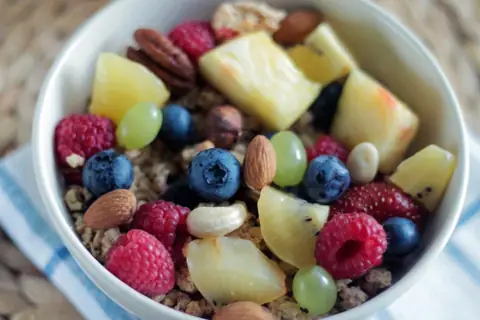
Breakfast is the first meal you can get right, and at Bicester Nutrition members share it at the club every morning before work. A free assessment helps you see which small change to make first.
Meal by meal





Your weight loss curve
Add your profile and the curve is redrawn at once.
Losing 8 kg at the median pace would take roughly 11 weeks, or around 4 months at the gentlest one.
Most guidance puts lasting weight loss at 500 g to 1 kg per week, which is the ideal zone on the chart. Lose more than 1 kg per week consistently and the body eats into muscle and not just fat, shown by the hatched zone.
This projection is a rough guide only. Each person’s journey is their own, and results are not the same for everyone. The sums are done on your device, with nothing stored or sent anywhere. Over 65, speak to your doctor before anything else.
How this curve is calculated
At the top, the zone’s edge marks 500 g per week, the gentlest rate. At the bottom, its edge marks 1 kg per week, the point where risk starts.
Weight comes off faster in the first weeks, much of it water, before the pace eases. Beyond 40, the median curve gradually flattens as metabolism slows down. With the same effort, men generally lose a little faster than women.
Like real life, the journey curve includes plateaus a few days long and minor regains. It is no prediction of the path you will follow.
The tips here are general and are no substitute for medical advice.
Further reading


Daily support is set out in the club programme for better balanced eating.