Macronutrients explained through the first meal of your day

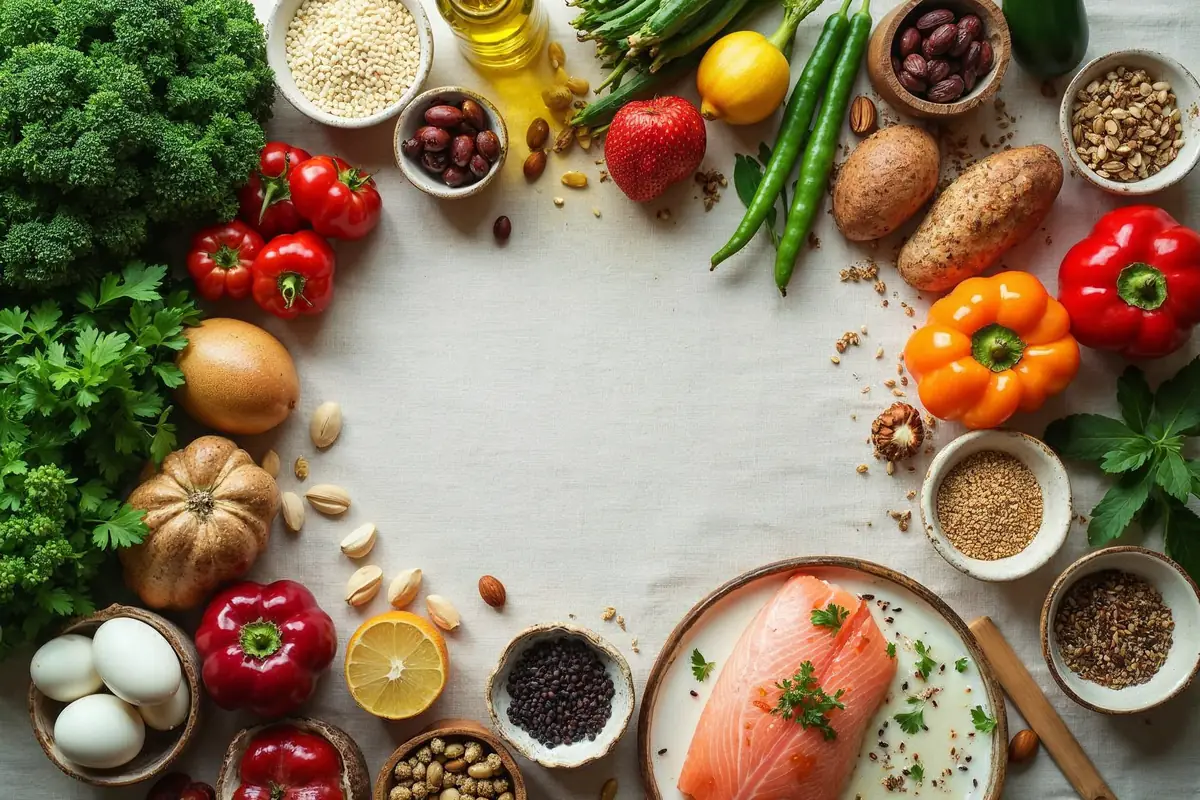
Macronutrients are the 3 parts of food that supply energy, namely protein, carbohydrate and fat, and almost every meal you eat is a mix of the 3. Rather than learn them from a chart, it is easier to take 1 ordinary breakfast apart and look at each piece.
A coach from the club reviews your circumstances alongside you and suggests the right next steps.
Book your free assessmentIn this article
A bowl of porridge on the table
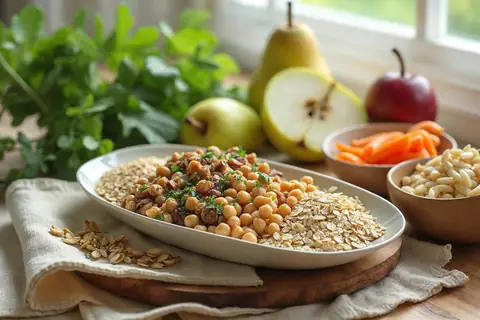
Picture a bowl of porridge made with milk, topped with a handful of berries and a spoon of chopped walnuts, with a boiled egg on the side. Nothing fancy. Yet each item plays a different role, and together they cover all 3 macronutrients.
The oats and the berries bring carbohydrate
Carbohydrate is the main fuel for your brain and muscles. Oats give the slow, starchy kind together with fibre. Berries add a little natural sugar, plus vitamins and colour. The NHS guide to eating a balanced diet suggests basing meals on starchy foods, ideally wholegrain, and that is exactly what the oats do here.
The milk and the egg bring protein
Protein builds and repairs tissue, and protein contributes to the maintenance of muscle mass. That matters when you eat a little less, because you want to keep the muscle you have. Milk also brings calcium. The NHS page on milk and dairy explains how to choose lower fat versions without losing that benefit.
The walnuts bring fat
Fat carries the vitamins A, D, E and K and supplies essential fatty acids your body cannot make. Walnuts give mostly unsaturated fat. A spoonful is enough, because fat holds about 9 kcal per gram, more than twice the figure for protein or carbohydrate.
The 4th source nobody lists at breakfast
Alcohol is not a nutrient, yet it carries about 7 kcal per gram. A couple of glasses of wine in the evening can supply more energy than the whole bowl above, with none of the protein or fibre. It is worth counting when you look at a full day.
And the small print, micronutrients
Vitamins and minerals are needed in tiny amounts and supply no energy at all. They come along with the macronutrients when the food is varied. Our guides to vitamins and minerals cover them 1 by 1.
Building other meals the same way
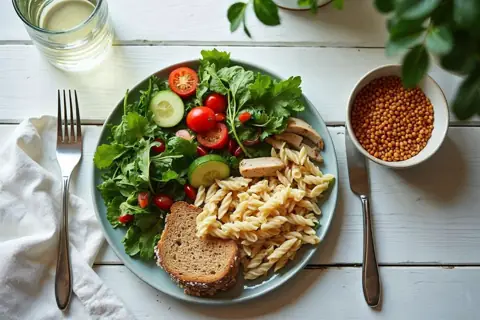
Once you can spot the 3 parts in a breakfast, you can do it anywhere. A sandwich on the train from Bicester North to Marylebone has bread for carbohydrate, a filling for protein and often a spread or mayonnaise for fat. Ask yourself which 1 is missing or oversized, then adjust. For most people trying to lose weight, it is the protein part that is too small. Our article on protein needs goes further.
Members of the club eat their breakfast together on site each morning before work, which makes this kind of plate a daily habit rather than a theory.
Needs differ with age, pregnancy, illness and activity. This article does not replace advice from your GP or another health professional.
Nutrient by nutrient





Your weight loss curve
Add your profile and the curve is redrawn at once.
Losing 8 kg at the median pace would take roughly 11 weeks, or around 4 months at the gentlest one.
Most guidance puts lasting weight loss at 500 g to 1 kg per week, which is the ideal zone on the chart. Lose more than 1 kg per week consistently and the body eats into muscle and not just fat, shown by the hatched zone.
This projection is a rough guide only. Each person’s journey is their own, and results are not the same for everyone. The sums are done on your device, with nothing stored or sent anywhere. Over 65, speak to your doctor before anything else.
How this curve is calculated
At the top, the zone’s edge marks 500 g per week, the gentlest rate. At the bottom, its edge marks 1 kg per week, the point where risk starts.
Weight comes off faster in the first weeks, much of it water, before the pace eases. Beyond 40, the median curve gradually flattens as metabolism slows down. With the same effort, men generally lose a little faster than women.
Like real life, the journey curve includes plateaus a few days long and minor regains. It is no prediction of the path you will follow.
The tips here are general and are no substitute for medical advice.
Further reading


Daily support is set out in the club programme for better balanced eating.