High-fibre foods and how to recognise them in the supermarket aisle

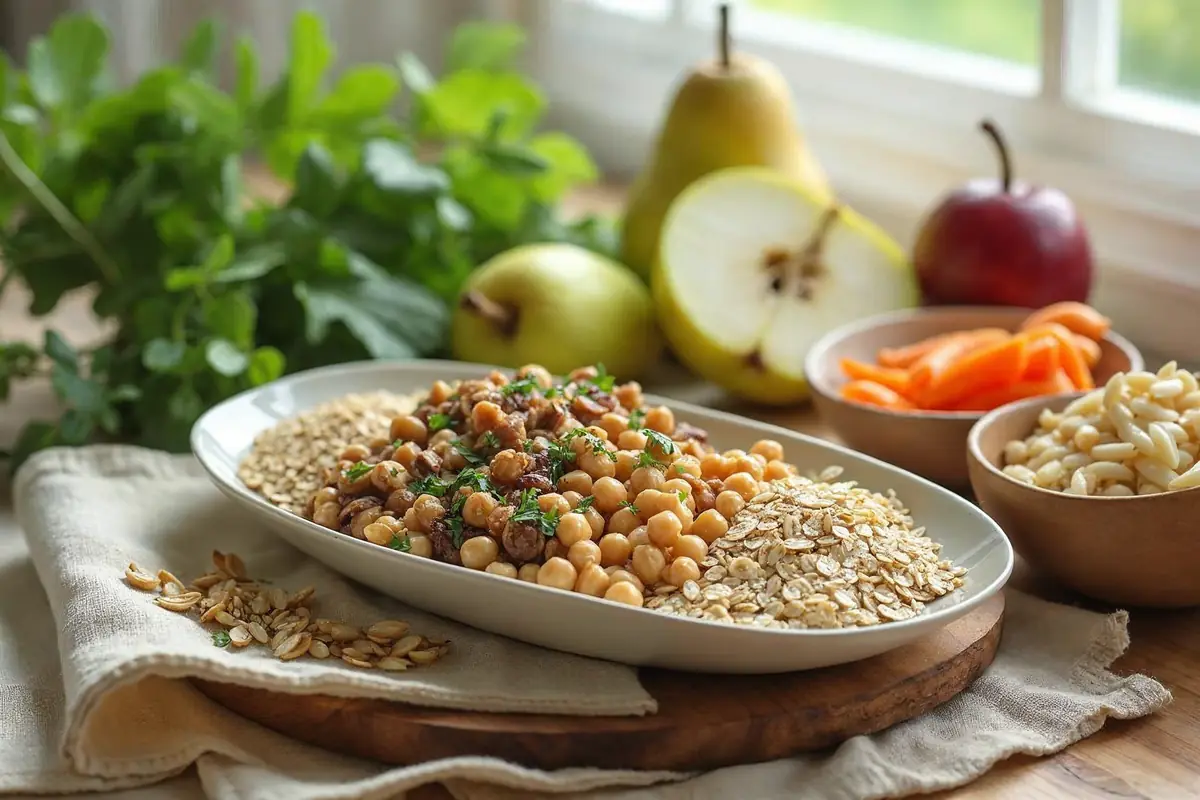
In the UK a food can only be called high fibre if it contains at least 6g of fibre per 100g, and a source of fibre if it contains at least 3g, so the label tells you quickly which products are worth your basket. With that rule in mind, reaching the 30g a day that adults are advised to eat becomes far less abstract.
A coach from the club reviews your circumstances alongside you and suggests the right next steps.
Book your free assessmentIn this article
2 kinds of fibre, 2 different jobs
Soluble fibre turns into a soft gel in the gut. You find it in oats, barley, beans, lentils and many fruits. Beta-glucans from oats and barley contribute to the maintenance of normal blood cholesterol levels, with a beneficial effect from 3g a day. Insoluble fibre, found in wholemeal bread, bran and the skins of vegetables, adds bulk. Wheat bran fibre contributes to an acceleration of intestinal transit. Most plant foods bring a mix of both.
Reading the panel on the back
Turn the packet over and find the line for fibre per 100g. Compare 2 loaves side by side. A white sliced loaf often sits around 2 or 3g, while a wholemeal loaf can reach 6 or 7g. The same trick works for breakfast cereals, crackers and pasta. Words such as multigrain or brown do not guarantee much fibre. The number does.
Foods that rarely carry a label
Fresh produce rarely carries a fibre claim, yet it does much of the work. A pear with its skin, a portion of peas, a jacket potato or a handful of raspberries all add a few grams each. The NHS guide to what counts as 1 of your 5 a day shows portion sizes, including beans and pulses.
A week of small upgrades
- Swap white toast for wholemeal on Monday.
- Add a tin of rinsed chickpeas to a curry on Wednesday.
- Keep the skins on new potatoes at the weekend.
- Try pearl barley in a soup instead of rice.
For families settling into the new homes in Kingsmere or Elmsbrook, these swaps work well in a shared kitchen because nobody needs a separate meal.
Gut comfort matters
Add fibre slowly over a few weeks and drink enough water, otherwise wind and bloating can put you off. Some people with irritable bowel syndrome need a different approach to certain fibres. The NHS page on IBS diet and lifestyle explains this, and a GP can refer you if needed. Our article on water and hydration gives simple drinking habits.
Fibre and a weight loss plan
High-fibre meals are often bulkier and take longer to eat, which many people find helps them feel satisfied with smaller portions. That is why a fibre rich breakfast is a sensible start to the day. See our guide to the best breakfast to lose weight for ideas.
The club opens on Monday and from Wednesday to Friday from 6:30am to 11am, early enough to start the day with a fibre rich breakfast before work.
This article does not replace advice from your GP or another health professional, especially if you have a bowel condition.
Your weight loss curve
Add your profile and the curve is redrawn at once.
Losing 8 kg at the median pace would take roughly 11 weeks, or around 4 months at the gentlest one.
Most guidance puts lasting weight loss at 500 g to 1 kg per week, which is the ideal zone on the chart. Lose more than 1 kg per week consistently and the body eats into muscle and not just fat, shown by the hatched zone.
This projection is a rough guide only. Each person’s journey is their own, and results are not the same for everyone. The sums are done on your device, with nothing stored or sent anywhere. Over 65, speak to your doctor before anything else.
How this curve is calculated
At the top, the zone’s edge marks 500 g per week, the gentlest rate. At the bottom, its edge marks 1 kg per week, the point where risk starts.
Weight comes off faster in the first weeks, much of it water, before the pace eases. Beyond 40, the median curve gradually flattens as metabolism slows down. With the same effort, men generally lose a little faster than women.
Like real life, the journey curve includes plateaus a few days long and minor regains. It is no prediction of the path you will follow.
The tips here are general and are no substitute for medical advice.
Further reading


Daily support is set out in the club programme for better balanced eating.