Healthy fats in the kitchen, which oil, spread and nut does which job

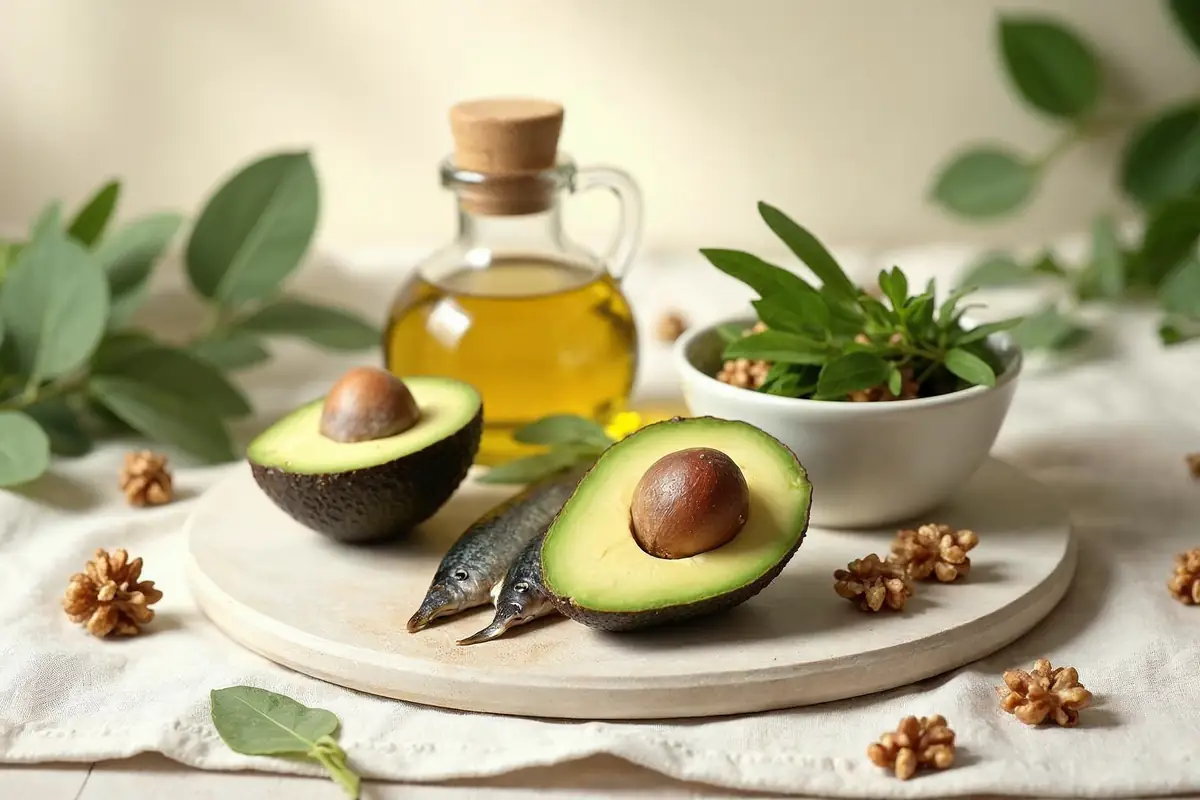
Healthy fats are mostly the unsaturated ones found in vegetable oils, nuts, seeds and oily fish, and the easiest way to eat more of them is to choose them deliberately for each job in the kitchen. You do not need to fear fat. You need to know which 1 you are reaching for.
A coach from the club reviews your circumstances alongside you and suggests the right next steps.
Book your free assessmentIn this article
The frying pan
For everyday cooking, rapeseed oil and olive oil are sound choices. Both are mostly unsaturated. Measure with a tablespoon instead of pouring from the bottle, because a free-hand splash can easily add 3 times what you meant. A spray or a pastry brush helps for roasting vegetables.
The butter dish
Butter, lard, ghee and coconut oil are high in saturated fat. You can still enjoy them, just in smaller amounts and less often. Replacing saturated fats with unsaturated fats in the diet contributes to the maintenance of normal blood cholesterol levels. A spread made from vegetable oils, used thinly, is a simple swap for toast.
The snack cupboard
Unsalted nuts and seeds bring unsaturated fat, some protein and some fibre. They are also dense in energy, so a small handful of about 30g is a sensible portion. Tip them into a small bowl instead of eating from the bag. Our list of snack ideas shows other ways to use them.
The fish counter
Oily fish such as salmon, mackerel, sardines and trout supply long chain omega 3 fats. EPA and DHA contribute to the normal function of the heart, with a beneficial effect from 250mg a day. Tinned fish counts and costs less. The Friday market on Market Square is a good excuse to try a fish you would not usually buy.
The label on the packet
Front of pack colours make comparison quick. The NHS guide to reading food labels explains that more than 5g of saturates per 100g counts as high, and 1.5g or less counts as low. Look at pastries, biscuits, cheese and processed meats, where saturated fat often hides.
How much fat sits in a day
UK guidance says men should eat no more than 30g of saturated fat a day and women no more than 20g. Total fat should stay moderate too, because every gram carries about 9 kcal. So healthy fats help when they replace other fats, not when they are added on top. The NHS page on how to lower your cholesterol gives practical swaps along the same lines.
Putting it into practice
Pick 1 room of the kitchen this week. Perhaps the frying pan. Next week, the snack cupboard. Small, steady swaps tend to stick. Our article on macronutrients shows where fat fits in a balanced plate.
Your first assessment at the club is free, and it is a relaxed way to look at your own fat sources with a coach trained in nutrition.
If you have high cholesterol or take medication, speak to your GP before big changes. This article does not replace advice from your GP or another health professional.
Your weight loss curve
Add your profile and the curve is redrawn at once.
Losing 8 kg at the median pace would take roughly 11 weeks, or around 4 months at the gentlest one.
Most guidance puts lasting weight loss at 500 g to 1 kg per week, which is the ideal zone on the chart. Lose more than 1 kg per week consistently and the body eats into muscle and not just fat, shown by the hatched zone.
This projection is a rough guide only. Each person’s journey is their own, and results are not the same for everyone. The sums are done on your device, with nothing stored or sent anywhere. Over 65, speak to your doctor before anything else.
How this curve is calculated
At the top, the zone’s edge marks 500 g per week, the gentlest rate. At the bottom, its edge marks 1 kg per week, the point where risk starts.
Weight comes off faster in the first weeks, much of it water, before the pace eases. Beyond 40, the median curve gradually flattens as metabolism slows down. With the same effort, men generally lose a little faster than women.
Like real life, the journey curve includes plateaus a few days long and minor regains. It is no prediction of the path you will follow.
The tips here are general and are no substitute for medical advice.
Further reading


Daily support is set out in the club programme for better balanced eating.