Restarting exercise after time off. A slow build that keeps you going


The safest way back into exercise is to begin below what you think you can do, use brisk walking as your base and add a little each week. Most comebacks stall because the first week is too ambitious, not because the body cannot cope.
A coach from the club reviews your circumstances alongside you and suggests the right next steps.
Book your free assessmentIn this article
Take stock before you start
Ask yourself 3 honest questions. How long has it been since you were regularly active? Do you have any joint, heart or breathing problems? Are you on medication? If any answer worries you, book a chat with your GP. If you are aged 40 to 74, the free NHS Health Check is a useful starting point, as it looks at blood pressure and other risks. This article is general advice and does not replace the opinion of a doctor or physiotherapist.
The talk test
You do not need a heart rate monitor. If you can talk but not sing, you are working at a moderate level, which is where a comeback should sit for the first month. If you cannot say a full sentence, slow down. This simple check keeps you away from the soreness that makes people give up after 3 sessions.
Walking as the foundation
Brisk walking is free, low impact and easy to fit around work. The NHS page on walking for health explains how to build up. Around Bicester, a loop of Garth Park or the paths through Bure Park nature reserve makes a pleasant 20 minutes. Start with 10 minutes a day, then add 5 minutes each week while the talk test stays easy.
Mobility, the part people skip
After a long break, stiff hips and shoulders are often the first thing you notice. A few gentle stretches after each walk help. The NHS flexibility exercises can be done at home in a few minutes, with no kit.
Food that supports the return
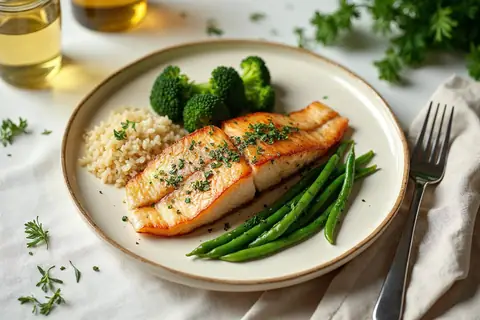
Exercise feels much harder on an empty stomach. A breakfast with protein, fibre and some fruit gives you steadier energy for a morning walk. Our guide to the best breakfast for weight loss has simple ideas, and water and hydration covers how much to drink.
Rest days count too
Muscles adapt between sessions, not during them. In the first weeks, alternate active days with lighter ones. Light aches the day after are normal. Sharp pain, dizziness or chest discomfort are signs to stop and seek medical advice.
A week by week rhythm
- Weeks 1 to 2. Daily 10 minute walks and 5 minutes of stretching.
- Weeks 3 to 4. 20 minute walks, 1 including a gentle hill.
- Weeks 5 onwards. 30 minutes on most days, plus 2 short strength sessions.
Your starting point at the club
At Bicester Nutrition, the free assessment gives you a clear starting point, and coaches trained in nutrition follow your progress every day over breakfast at the club.
Moving and recovering



Your weight loss curve
Add your profile and the curve is redrawn at once.
Losing 8 kg at the median pace would take roughly 11 weeks, or around 4 months at the gentlest one.
Most guidance puts lasting weight loss at 500 g to 1 kg per week, which is the ideal zone on the chart. Lose more than 1 kg per week consistently and the body eats into muscle and not just fat, shown by the hatched zone.
This projection is a rough guide only. Each person’s journey is their own, and results are not the same for everyone. The sums are done on your device, with nothing stored or sent anywhere. Over 65, speak to your doctor before anything else.
How this curve is calculated
At the top, the zone’s edge marks 500 g per week, the gentlest rate. At the bottom, its edge marks 1 kg per week, the point where risk starts.
Weight comes off faster in the first weeks, much of it water, before the pace eases. Beyond 40, the median curve gradually flattens as metabolism slows down. With the same effort, men generally lose a little faster than women.
Like real life, the journey curve includes plateaus a few days long and minor regains. It is no prediction of the path you will follow.
The tips here are general and are no substitute for medical advice.
Further reading

Daily support is set out in the club programme for better balanced eating.